Happy Endings
Sonja Teszler
In one of my (many!) favourite Fran Lebowitz quotes, she says she only needs two things in life: cigarettes and revenge. When an interviewer asked her whether she likes her revenge served “hot or cold”, she replies, “Oh, it’s always good. People like to say that the desire for vengeance is not a high human desire, but it’s very satisfying.” And later, adds: “I think holding grudges is just another word for having standards.”
Food for thought (pun intended).
In my conversation with Caroline Wong about her new series of paintings Happy Endings, created over the course of 2024 and 2025, in which the idea and feeling of revenge are very much central, we talked a lot about where this impulse comes from. Unfortunately–or fortunately, depending on who you ask–a Kill Bill–style killer rampage isn’t accessible to all. More often, the path to revenge has many road blocks; to do with power politics, with the sense that you can’t act or speak too openly without putting your career, finances, or emotional energy at risk, with feeling frustrated and helpless and at the mercy of external circumstances. So, feelings of retaliation, of claiming control over one’s own narrative, have to be channelled into alternative, more implicit media. For me, it was making rap music. For Caroline Wong, it’s making art–and food.
Happy Endings consists of six individual portraits, each depicting girlfriends of the artist, and one larger group tableau. In the portraits, each figure is staged within brightly coloured, densely packed kitchen interiors–lush, generous and slightly chaotic in its ‘lived in’, domestic intimacy, saturated with food, hanging meats, stacked jars, and vegetables. This sense of decorative excess in composition feels very much quintessential to Wong’s practice. Fleshy pinks and reds dominate, producing an atmosphere that oscillates between looming threat and a certain stylised girlhood, not unlike a Sofia Coppola mise-en-scène. Wong photographed her subjects individually before placing them into these imagined domestic spaces, assembled from recognisable kitchen elements rather than any specific real location. The expressions of the women are controlled, focused, contained, their gaze confronting the viewer directly. One figure, a self-portrait, has an unsettling, almost manic smile. Several women have bandages wrapped around their fingers, a small but telling detail. Revenge, Wong suggests, is never entirely clean. “You get a bit drunk on it,” she says, “but it’s not actually satisfying.” The fantasy keeps you going, but it also leaves its mark. Movement and gesture are suspended in inevitable violence: knives about to strike, splice, or crush; scissors about to split and cut. Cucumbers, sausages, radishes, stuffed pastries, and other unmistakably phallic foods await chopping and their violent end–their own promised ‘happy ending’.
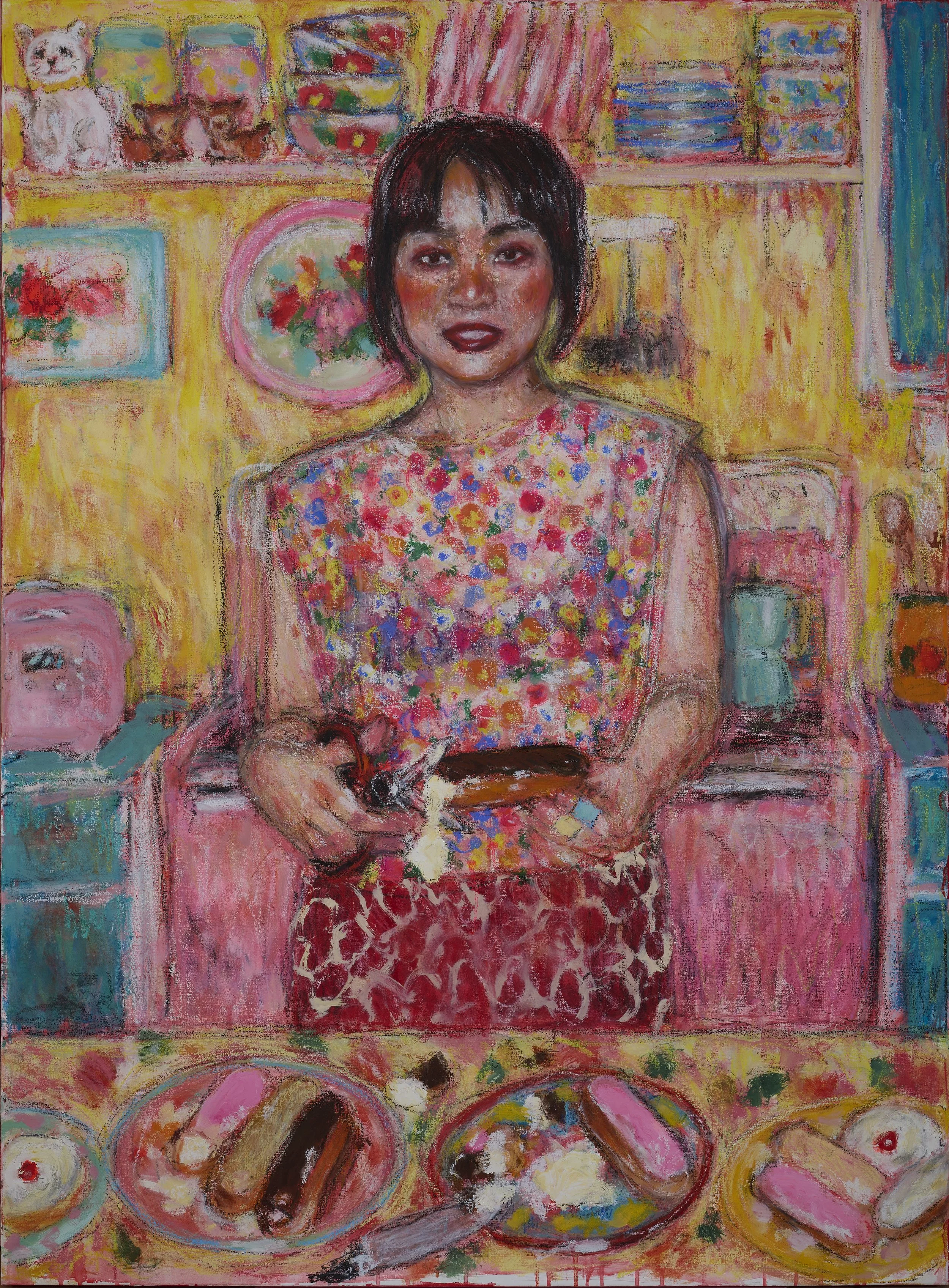
Faithe with scissors, oil, oil pastel, oil bar, and acrylic on linen, 90cm x 120cm, 2025
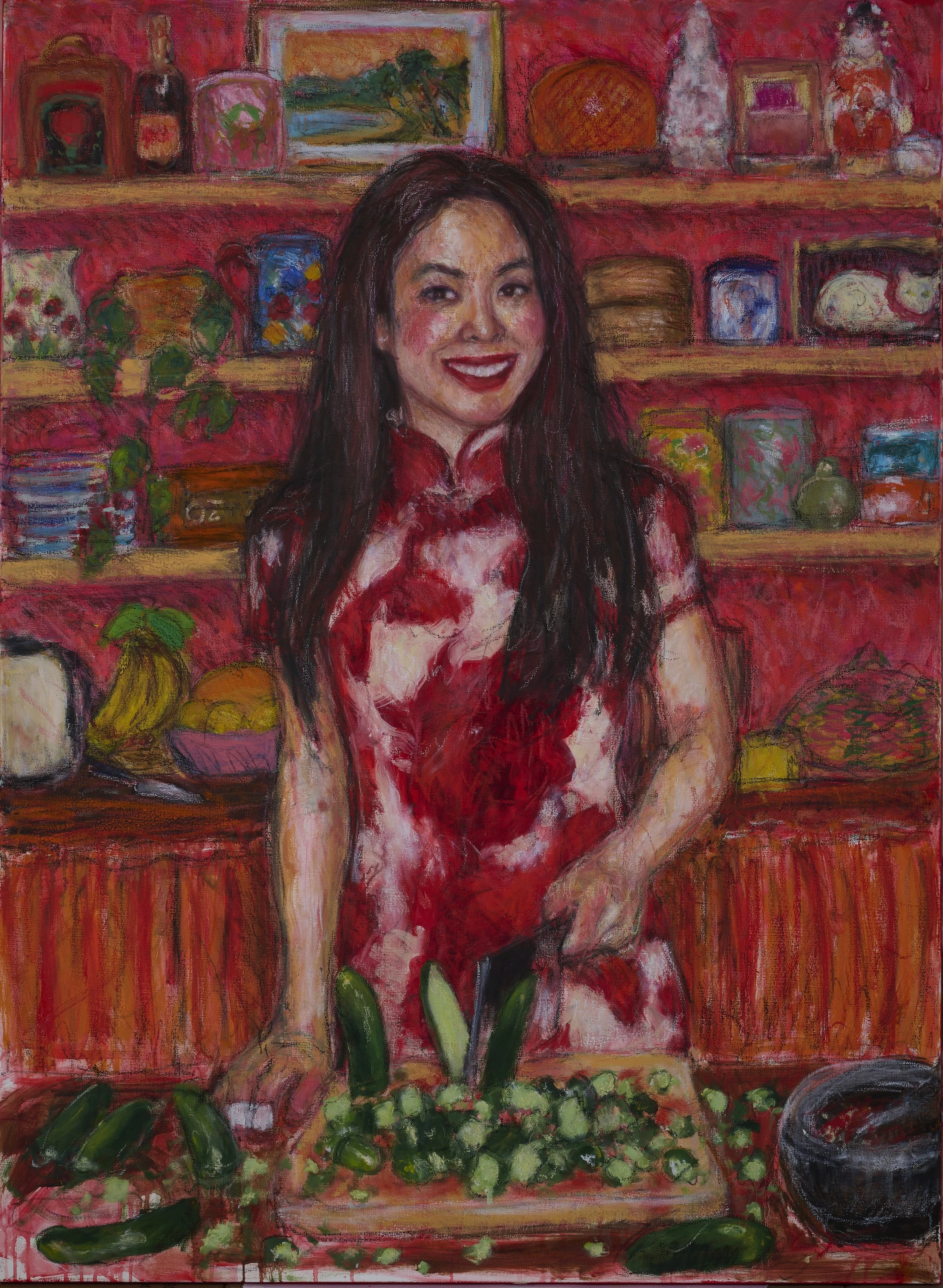
Caroline with cleaver, oil, oil pastel, oil bar, and acrylic on linen, 90cm x 120cm, 2025
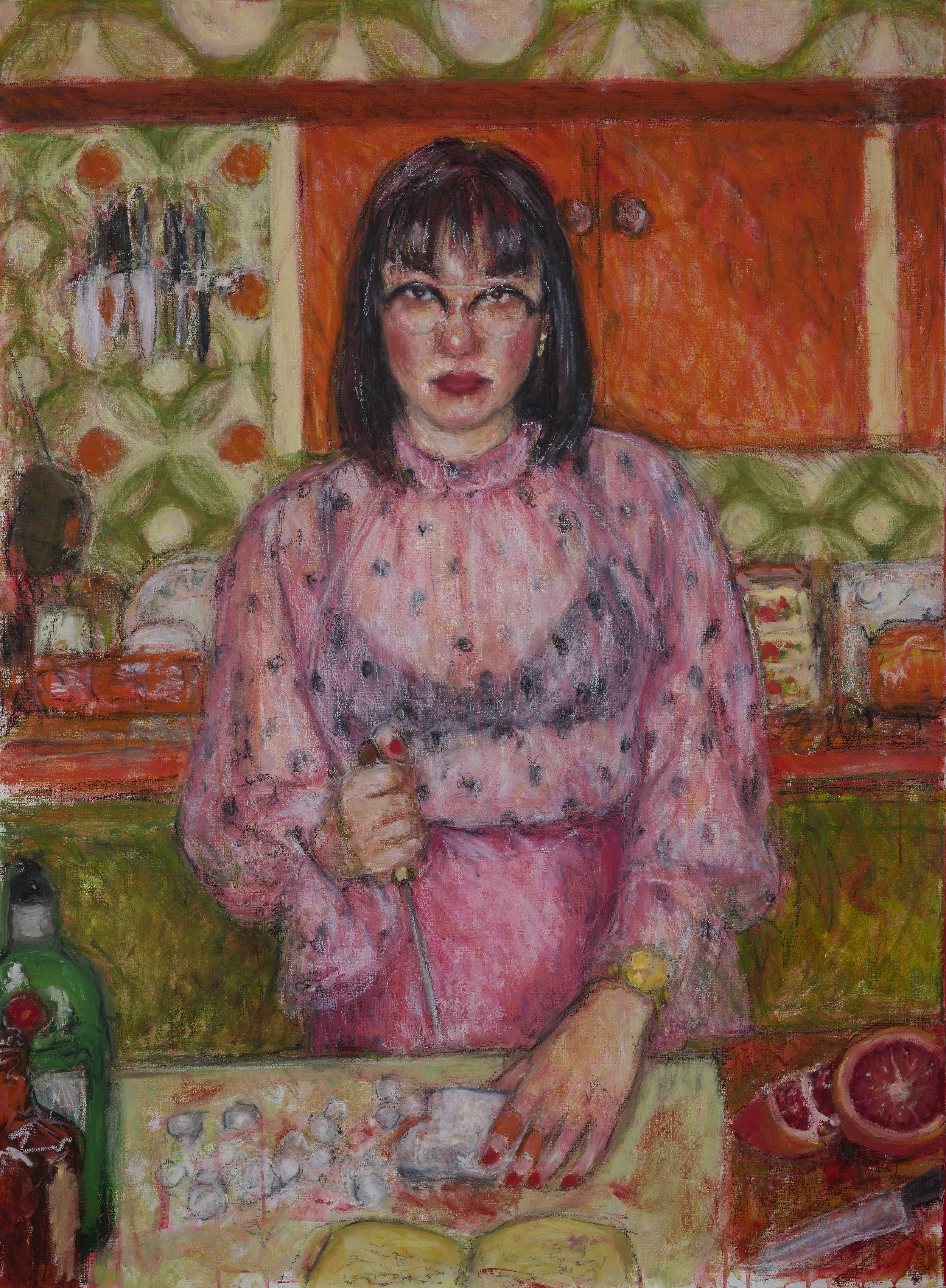
Allison with icepick, oil, oil pastel, oil bar, and acrylic on linen, 90cm x 120cm, 2025
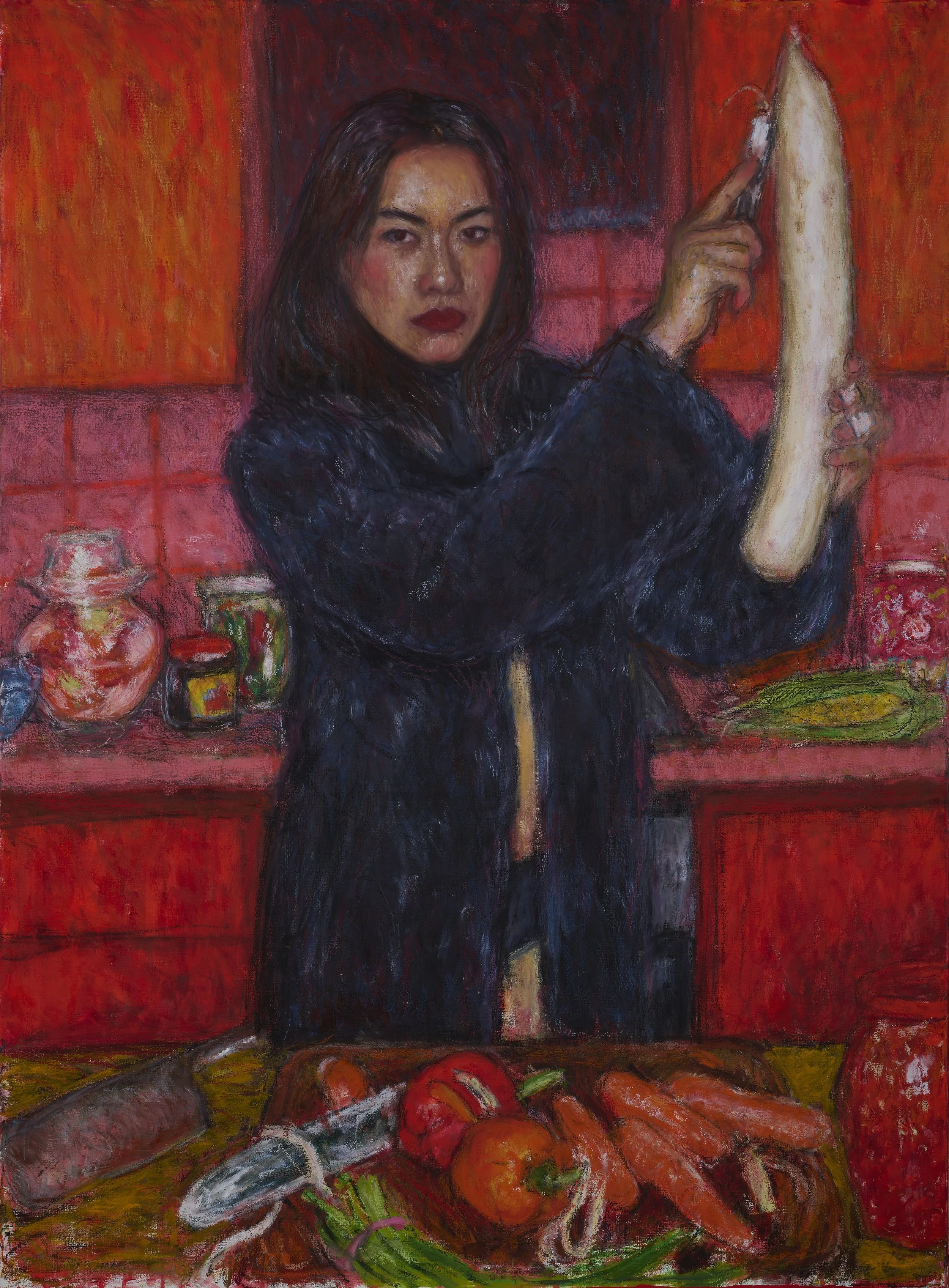
Jenny with peeler, oil, oil pastel, oil bar, and acrylic on linen, 90cm x 120cm, 2025
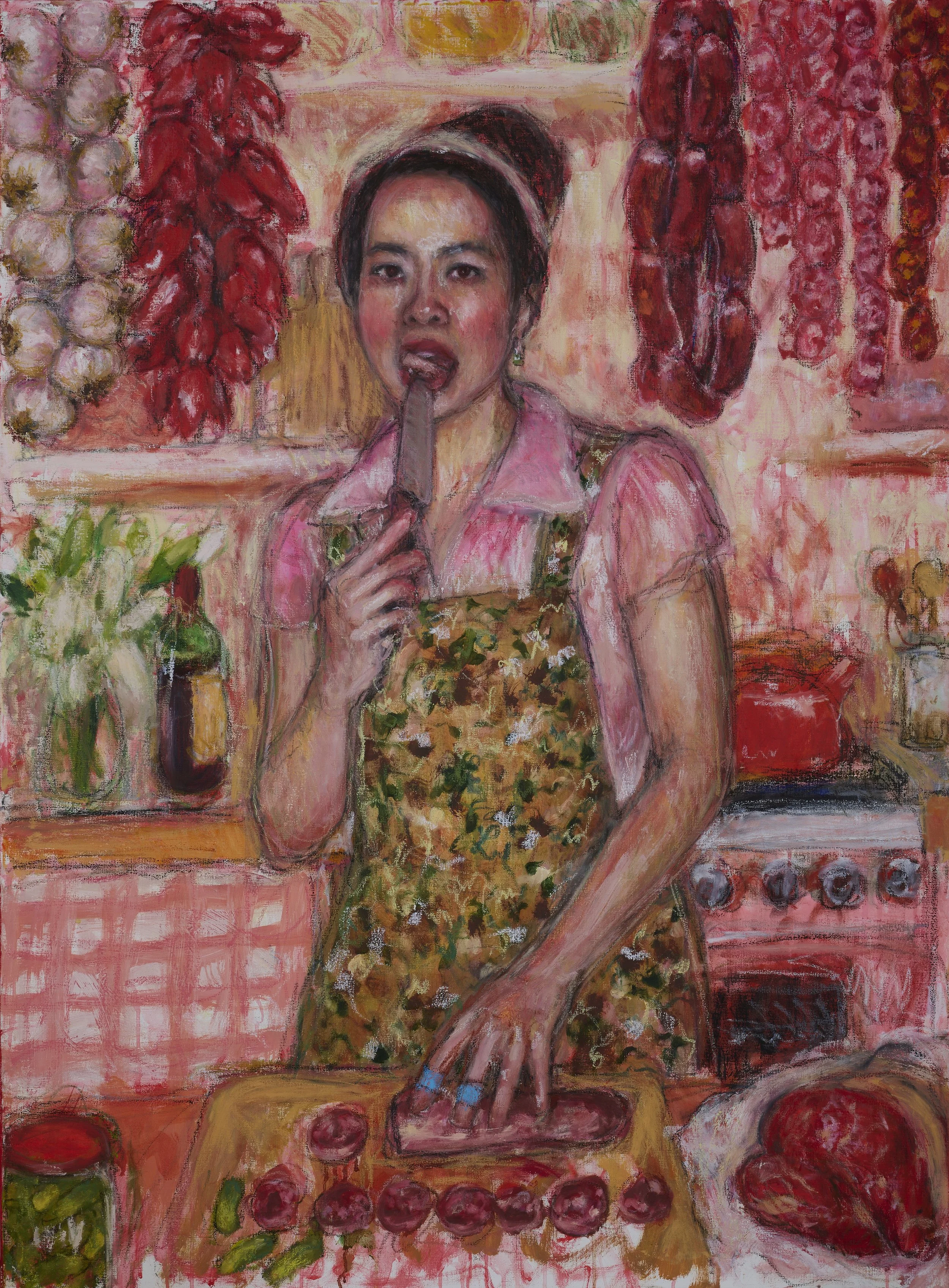
Betty with knife, oil, oil pastel, oil bar, and acrylic on linen, 90cm x 120cm, 2025
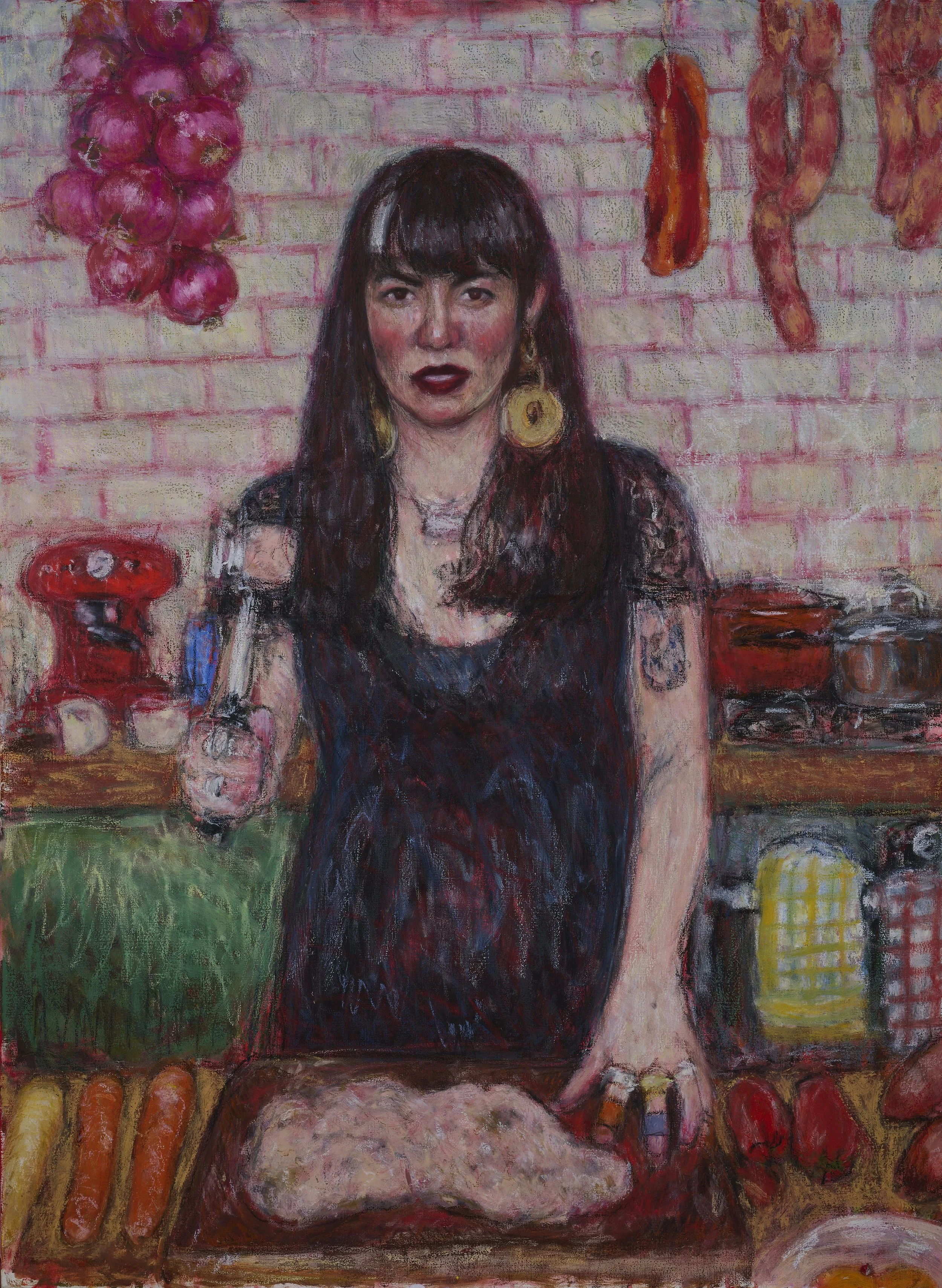
Anna with tenderiser, oil, oil pastel, oil bar, and acrylic on linen, 90cm x 120cm, 2025
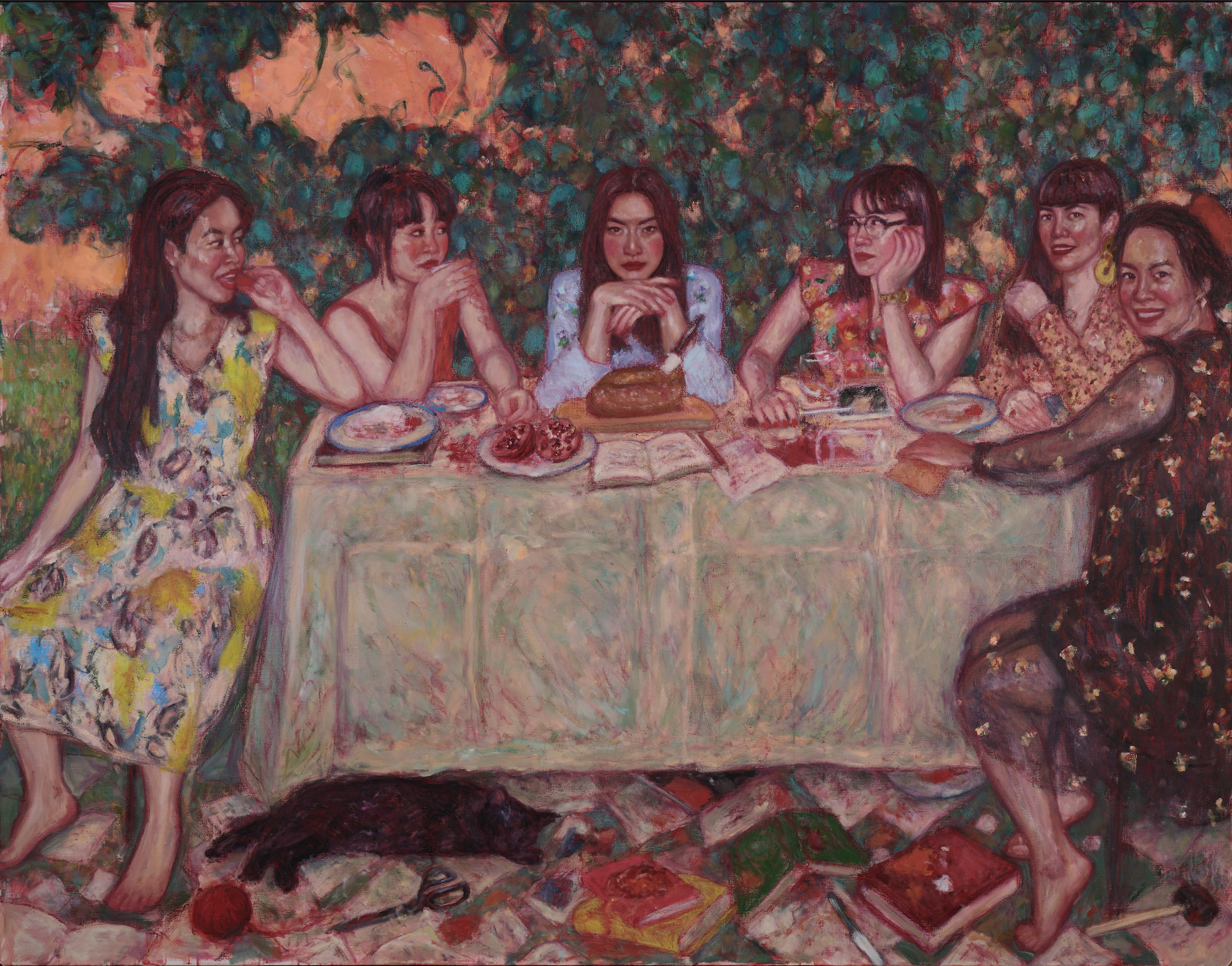
Happy Endings, oil, oil pastel, oil bar, and acrylic on linen, 180cm x 230cm, 2025
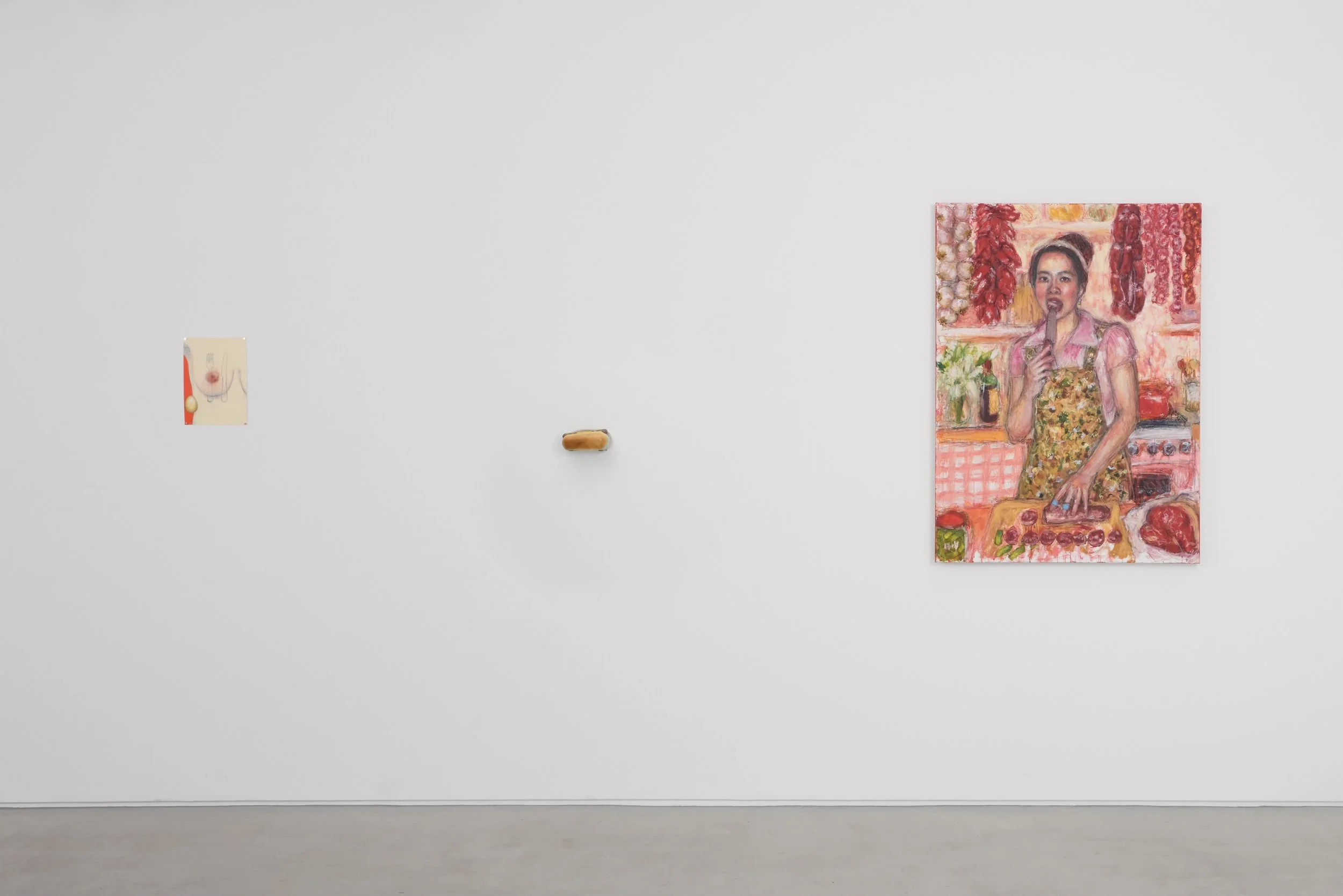
Install view, Say When..., Soho Revue, London 2026
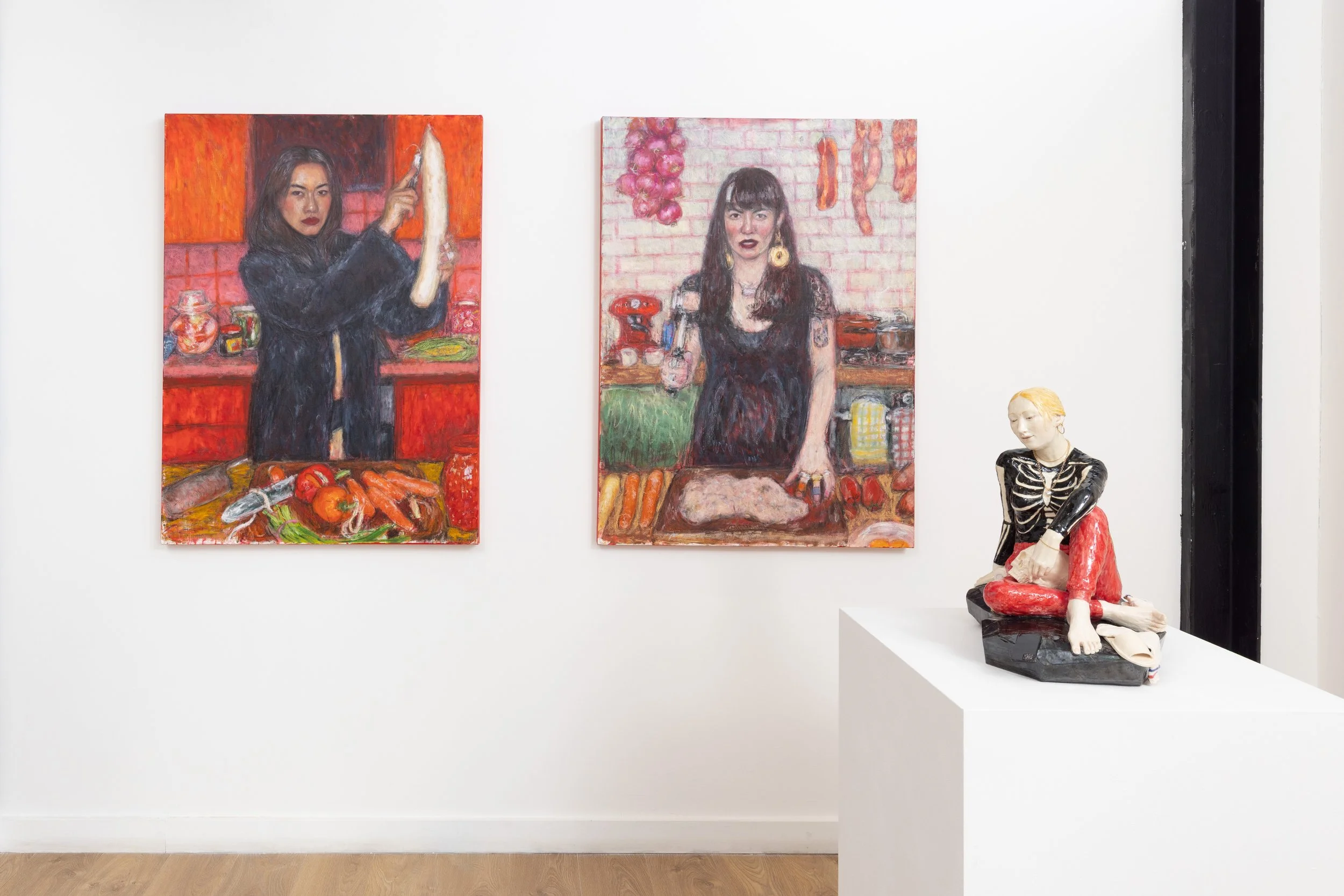
Install view, Tainted Love, Kristin Hjellegjerde Gallery, London, 2026
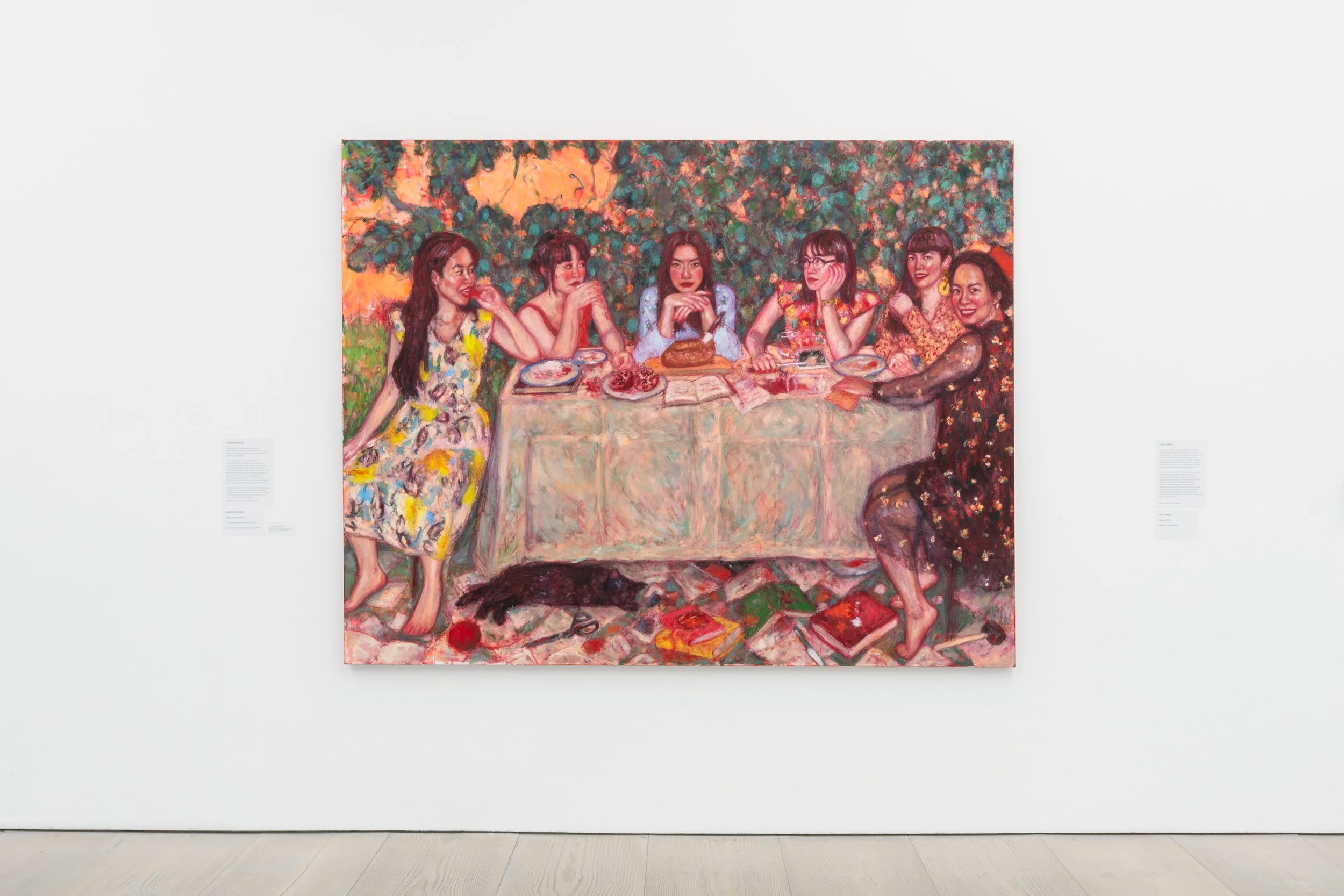
Install view, Myths, Dreams, and New Realities (Bagri Foundation), Saatchi Gallery, 2025
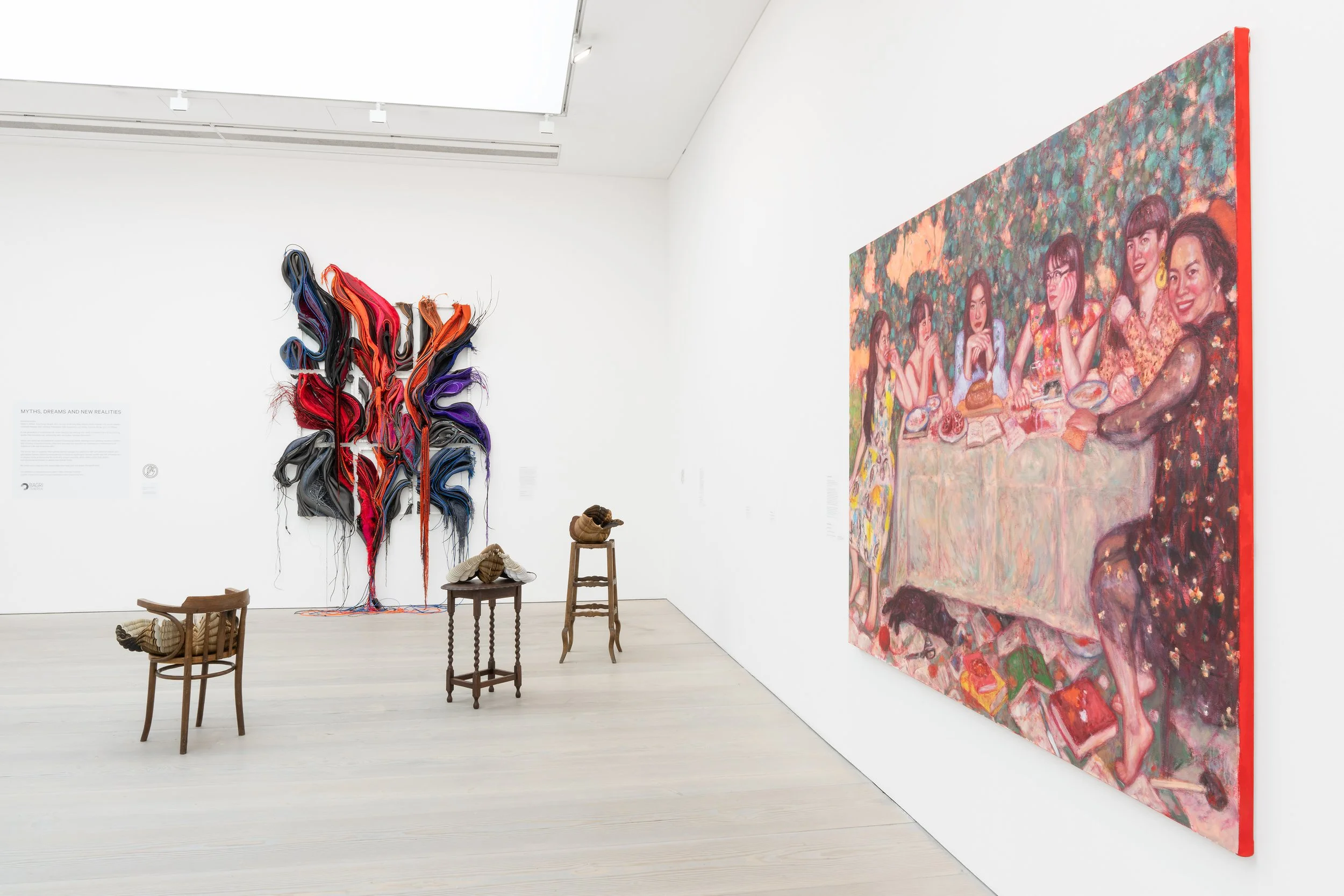
Install view, Myths, Dreams, and New Realities (Bagri Foundation), Saatchi Gallery, 2025
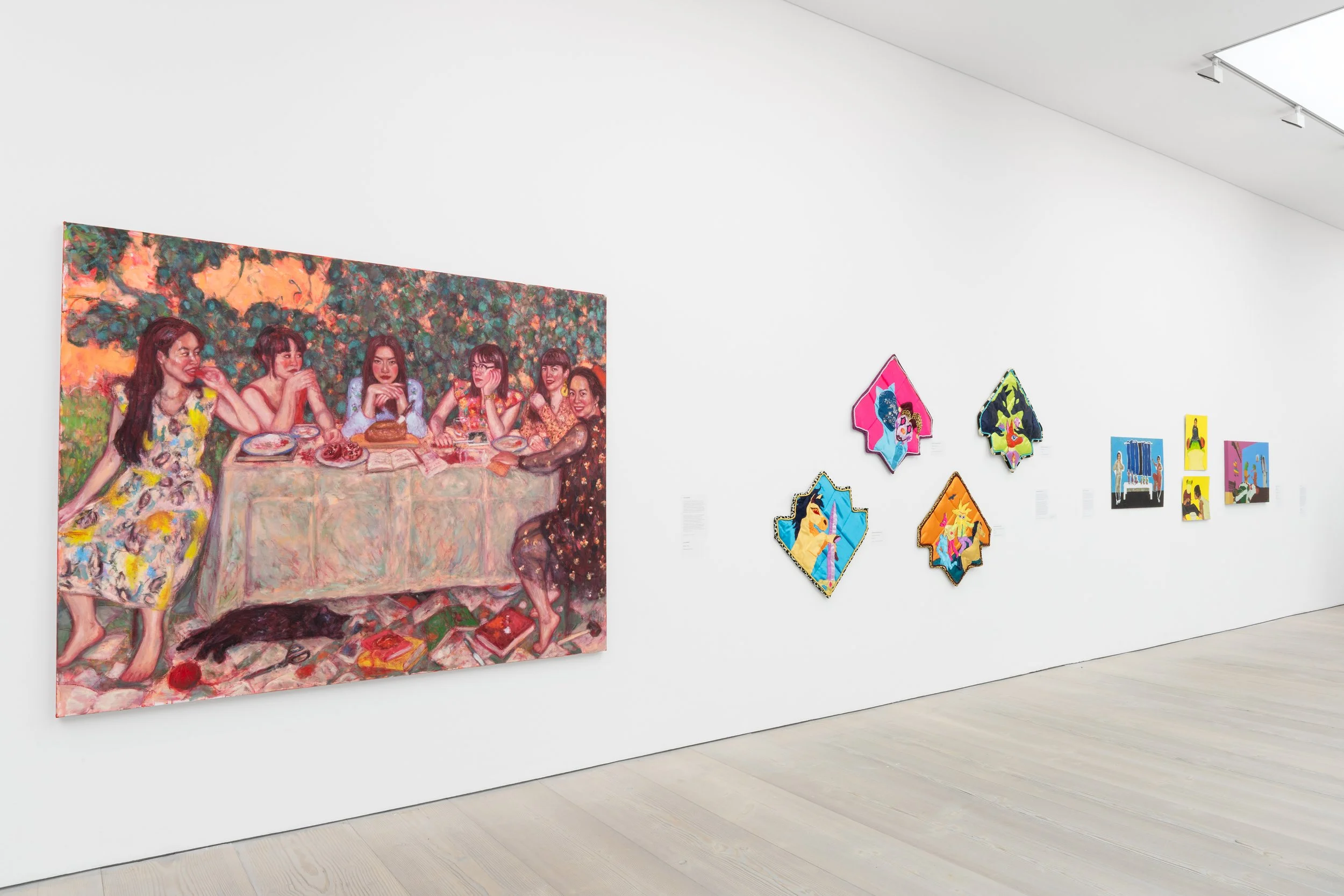
Install view, Myths, Dreams, and New Realities (Bagri Foundation), Saatchi Gallery, 2025